"Glaser's well-research analysis of the three models of power ownership—private companies, cooperatives, and tribal enterprises—offers useful commentary to modern promoters of worldwide rural electrification."—M. L. Tate, Choice
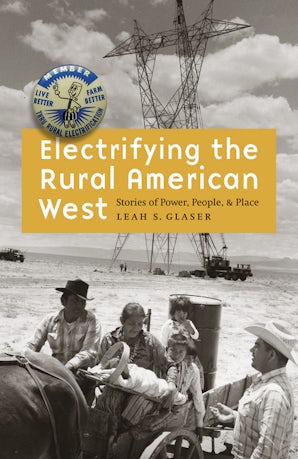
[Electrifying the Rural American West] is a well-researched, detailed, "bottom-up" addition to the history of twentieth-century western development that centers the actions of diverse individuals within national institutions."—David Brooks, Montana, The Magazine of Western History
"Glaser provides a valuable look at how local peoples and communities can influence the larger contours of energy policy, infrastructure, and resource use."—David D. Vail, Annals of Wyoming
"Glaser's fine book should be read not only by western and Native American historians, but by an scholars interested in the responses of rural places and peoples to the forces of twentieth-century modernity."—Andrew Needham, New Mexico Historical Review
"Using concepts of modernization, deregulation, and localism as a means to address the ways in which technological progress can benefit and interrupt social and cultural cohesiveness, Leah S. Glaser has written a thoughtful and insightful examination of the process of electrification in the American West."—Christopher J. Castaneda, Western Historical Quarterly