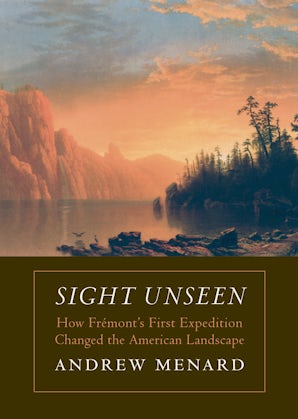
“Eloquent, lively, and learned, with an intellectual breadth as wide as a Rocky Mountains horizon, Andrew Menard’s Sight Unseen ably reconnoiters geographies of both imagination and terra firma. This fascinating book recovers the American West as John Frémont found it and shows us how the explorer taught us to see American landscapes—and America itself—anew.”—Tom Chaffin, author of Pathfinder: John Charles Frémont and the Course of American Empire
“[A] sharp and canny synthesis. . . . Most impressive in Sight Unseen is the meticulous way Menard makes his case that his imaginative transformation was a textual one.”—Robert Thacker, Western American Literature
"[Sight Unseen is] a well-written work revealing an essential part of the history of the North American continent."—G.J. Martin, Choice
"Sight Unseen is a rigorously researched, exceptionally astute, and well-reasoned interdisciplinary study of a report that defined America's emerging ideology of progress. It is a splendid contribution to the historiography of both Frémont and nineteenth-Century America."Fred MacVaugh, Nebraska History
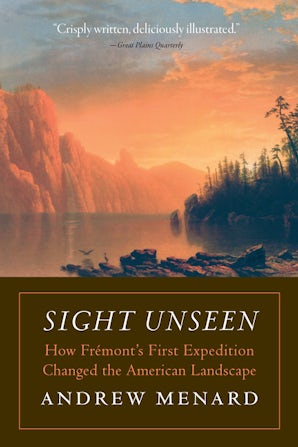
"Crisply written, deliciously illustrated."—Ryan Boyd, Great Plains Quarterly
"Through the imaginative eyes of Frémont, Menard makes significant strides in linking the words of the explorer and naturalist to the cultural concept that would shape the future land use and settlement of the American West."—Camden Burd, Historical Geography
"Anyone interested in how Americans transformed western lands from obstacles into symbols of national achievement will find much of value in Menard's work."—Jared Orsi, Kansas History